
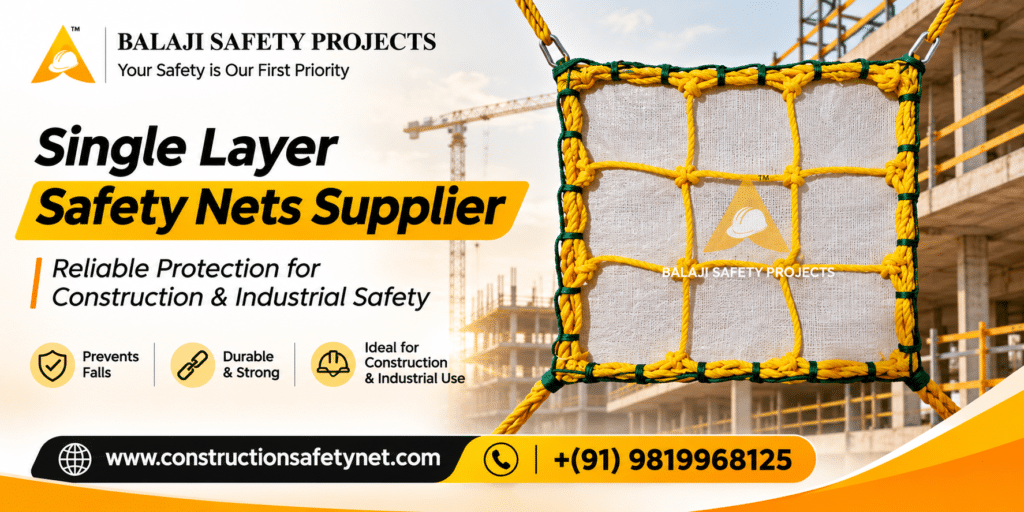
Single Layer Safety Nets Supplier
Introduction
Balaji Safety Projects provides workplace safety netting solutions for the roofing and construction industries. Additionally our product range encompasses Braided Safety Nets, Agro Shade Nets, Monofilament Nets / Scaffolding Nets, Anti Bird Net, Bird Spikes, Full Body Harness & Protective Equipments and ropes etc. We use good quality raw materials to make these safety nets and ropes. Since the establishment of the company, we regularly improvise on our existing range of products of safety nets in order to come up with products that stand high on performance and durability.
Safety is one of the most important requirements at construction sites, industrial locations, residential projects, and commercial buildings. Workers often perform tasks at heights where even a small mistake can cause serious accidents. Proper safety arrangements are necessary to protect workers, prevent injuries, and maintain a safe working environment. One of the most useful safety products for these applications is a single layer safety net.
If you are searching for a reliable Single Layer Safety Nets Supplier, choosing a company that understands safety requirements, product quality, and customer needs is important. Balaji Safety Projects focuses on providing safety net solutions designed to support safer working conditions across different industries.
Balaji Safety Projects focuses on providing safety net solutions designed to support workplace protection and construction safety requirements. Single layer safety nets are useful for different applications where protection against falling objects, debris, and accidental falls is required. Choosing the right safety net can improve site safety, reduce risks, and support better safety management.
What Are Single Layer Safety Nets
Single layer safety nets are protective nets installed at construction sites and other elevated working areas to reduce the risk of falling objects and people. They provide an additional safety barrier below or around working platforms, depending on the site requirements.
These nets are commonly used in buildings, bridges, factories, warehouses, and infrastructure projects. They help improve workplace safety by providing protection in areas where workers operate at heights.
A professional Single Layer Safety Nets Supplier understands that every project has different safety requirements. Therefore, selecting the correct net according to the working height, installation location, expected load, and application is important.
Importance of Single Layer Safety Nets
Construction workers frequently work on rooftops, scaffolding, high-rise buildings, and open structures. Without proper safety protection, these working conditions can become dangerous.
1. Protection Against Falling Debris
Construction materials, tools, and small objects can accidentally fall from higher floors. Properly selected and installed safety nets help contain debris and reduce the possibility of injuries to people below.
2. Improved Workplace Safety
Safety nets help create a more protected working environment. They support construction safety planning and encourage better risk management at the workplace.
3. Suitable for Different Applications
Single layer safety nets can be used in residential buildings, commercial projects, industrial facilities, and infrastructure development, depending on the net specification.
4. Easy Installation and Handling
Many single layer netting systems are designed for convenient handling and installation. However, proper fixing, support, and inspection are necessary to maintain their safety performance.
Types of Single Layer Safety Nets
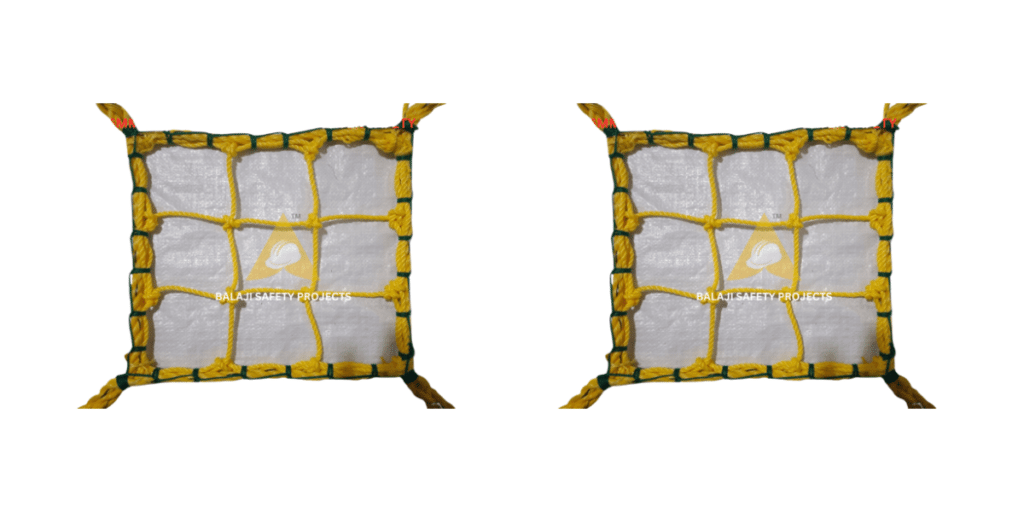
1. Knotted Single Layer Safety Nets
Knotted single layer safety nets are manufactured by connecting individual net threads through strong knots. This construction provides a secure net structure and helps maintain its shape during regular use.
- Strong knotted construction.
- Good resistance to regular handling.
- Flexible and easy to install.
- Available in different mesh sizes.
- Suitable for various construction requirements.
2. Knotless Single Layer Safety Nets
Knotless single layer safety nets are manufactured using a special weaving or joining process without traditional knots. Their smooth construction helps reduce friction and provides a uniform net surface.
- Smooth and uniform construction.
- Lightweight and flexible design.
- Easy handling and installation.
- Consistent mesh structure.
- Suitable for different workplace applications.
3. HDPE Single Layer Safety Nets
HDPE (High-Density Polyethylene) single layer safety nets are made using durable polyethylene material. They are commonly selected for outdoor construction projects because of their lightweight structure and resistance to moisture.
- Lightweight and durable material.
- Good moisture resistance.
- UV-stabilised options available.
- Easy to transport and handle.
- Suitable for outdoor construction environments.
4. Nylon Single Layer Safety Nets
Nylon single layer safety nets are manufactured using nylon fibres that provide flexibility and good tensile properties. They are used in selected industrial and construction applications where strength and flexibility are required.
- Flexible material structure.
- Good tensile properties.
- Durable fibre construction.
- Available in different specifications.
- Suitable for selected industrial uses.
5. Polypropylene Single Layer Safety Nets
Polypropylene single layer safety nets are made from lightweight synthetic fibres. They are suitable for applications where easy handling and resistance to moisture are important considerations.
- Lightweight construction.
- Good moisture resistance.
- Easy installation and handling.
- Available in customised sizes.
- Suitable for industrial and construction applications.
6. Construction Single Layer Safety Nets
Construction single layer safety nets are specially selected for building and infrastructure projects. They are used around construction areas to help protect workers and control the risk of falling objects, depending on the net’s certified design and installation.
- Suitable for construction environments.
- Available in different dimensions.
- Designed for specific safety applications.
- Flexible installation options.
- Helps improve workplace safety.
Applications of Single Layer Safety Nets
1. Construction Site Safety
Single Layer Safety Nets are widely used at construction sites to protect workers and people working around elevated areas. They can be installed around building structures, scaffolding, and open work areas to provide additional protection against accidental falls. They also help reduce risks during different stages of construction.
2. High-Rise Building Projects
During the construction of high-rise buildings, workers often perform activities at considerable heights. Single Layer Safety Nets can be installed at suitable locations to provide fall protection and improve workplace safety. They are useful for residential towers, commercial buildings, offices, and large infrastructure projects.
3. Industrial Safety Applications
Factories and industrial facilities often have elevated platforms, machinery areas, and maintenance zones. Single Layer Safety Nets can be used in appropriate locations to create additional protection for workers. They help industries maintain safer working conditions during installation, inspection, and repair activities.
4. Scaffolding Protection
Scaffolding is commonly used for painting, plastering, construction, and repair work. Single Layer Safety Nets can be installed as part of a properly designed scaffolding safety arrangement. They provide additional protection around elevated working areas and help reduce the danger associated with accidental falls.
5. Bridge Construction Projects
Bridge construction involves working at heights above roads, rivers, and other challenging locations. Single Layer Safety Nets can be used in suitable applications to support worker safety during construction and maintenance activities. Their installation should be planned according to the project requirements and site conditions.
6. Warehouse and Storage Facilities
Warehouses often contain high storage racks, loading platforms, and elevated working spaces. Single Layer Safety Nets can be installed in selected areas to provide additional protection against falling objects or accidental falls, depending on their design and certified application.
7. Infrastructure Development
Infrastructure projects such as flyovers, metro construction, tunnels, and large public structures require proper safety arrangements. Single Layer Safety Nets can support site safety plans by providing protection in suitable elevated work zones. They are useful for projects where workers regularly operate above ground level.
8. Building Renovation and Maintenance
Renovation and maintenance activities may involve repairing walls, roofs, ceilings, and external building structures. Single Layer Safety Nets can be used to improve safety around these work areas. They help contractors establish additional protection while carrying out repair and maintenance operations.
9. Residential and Commercial Projects
Residential apartments, shopping complexes, hotels, hospitals, and office buildings require proper safety arrangements during construction. Single Layer Safety Nets can be installed in suitable areas to help protect workers and reduce the risk of accidents during building activities.
10. Painting and Exterior Wall Work
Workers involved in exterior painting, plastering, and wall finishing often work on scaffolding or elevated platforms. Single Layer Safety Nets can provide additional safety support when installed according to the required specifications. They help create a safer environment for workers performing exterior building activities.
Benefits of Single Layer Safety Nets
1. Improved Workplace Safety
Single layer safety nets help improve workplace safety by providing an additional protective layer in areas where there is a risk of falling objects or accidental falls. They support safer working conditions at construction sites and industrial facilities.
2. Strong and Durable Material
Quality safety nets are manufactured using durable materials such as high-strength synthetic fibres. These materials are selected to provide good strength, flexibility, and resistance to regular site conditions. Proper material selection helps ensure reliable performance.
3. Protection Against Falling Objects
Construction sites often involve tools, building materials, and equipment working at different heights. Single layer safety nets help catch or control falling objects when correctly selected and installed, reducing the possibility of injuries and property damage.
4. Cost-Effective Safety Solution
Single layer safety nets can be a practical and economical safety solution for suitable applications. Their installation can help reduce accident-related losses, equipment damage, and workplace interruptions.
5. Easy Installation and Handling
A well-designed single layer safety net can be easier to handle, transport, and install. Depending on the site structure and installation method, it can be fitted across different working areas to provide additional protection.
6. Flexible Applications
Single layer safety nets are suitable for various applications, including residential construction, commercial projects, warehouses, factories, industrial facilities, and building maintenance work. Their flexibility makes them useful for different workplace requirements.
7. Better Site Management
Using appropriate safety nets helps construction companies maintain organised and safer working areas. They provide an additional safety measure and support better management of high-risk working zones.
8. Weather Resistance
Safety nets made from suitable synthetic materials can offer resistance to moisture, sunlight, and changing outdoor conditions. However, their actual weather resistance depends on material quality, UV stabilisation, and maintenance practices.
9. Customised Safety Solutions
Different projects require different net sizes, mesh specifications, strengths, and installation arrangements. A professional supplier can help customers select suitable safety nets according to their site dimensions and safety requirements.
How to Select the Right Single Layer Safety Nets
Before purchasing safety nets, customers should consider several important factors.
- Material Quality: Check the material used to manufacture the net and ensure it is suitable for the intended application.
- Mesh Size: Select an appropriate mesh size according to the type of objects or debris that need to be contained.
- Net Strength: Check the rated load capacity and relevant performance specifications. Do not assume that a debris net is suitable for catching people.
- Weather Resistance: For outdoor projects, consider resistance to sunlight, rain, and changing weather conditions.
- Installation Requirements: Ensure that the net can be securely installed using suitable supports and fixing arrangements.
- Safety Standards: Check applicable safety standards, testing details, and manufacturer documentation before selecting a product.
Professional installation and regular inspection are essential. Safety nets should not replace personal protective equipment, guardrails, or other required fall-protection measures.
Why Choose Balaji Safety Projects
1. High-Quality Safety Net Materials
Quality is one of the most important factors when selecting single layer safety nets. A professional supplier provides nets manufactured using suitable materials such as high-strength polypropylene (PP) or other specified synthetic fibres. Good-quality materials offer durability, flexibility, and resistance to regular site conditions. The material should be selected according to the intended application and required safety performance.
2. Reliable Strength and Durability
Single layer safety nets should be strong enough for their intended protective application. Their strength depends on the material, mesh design, rope construction, manufacturing process, and applicable safety specifications. A reliable supplier helps customers select suitable nets that provide dependable performance and long-term value when properly installed and maintained.
3. Protection at Construction Sites
Construction projects involve several activities at different heights, making fall protection an important requirement. Single layer safety nets can be used in suitable areas to help reduce the risk of injuries caused by accidental falls. They are useful around building structures, elevated platforms, bridges, and other construction locations where appropriate fall protection is required.
4. Customised Safety Net Solutions
Every construction and industrial project has different safety requirements. A professional Single Layer Safety Nets Supplier understands that customers may need different net dimensions, mesh sizes, materials, and configurations. Customised solutions help ensure that the safety net matches the installation area and intended application.
5. Cost-Effective Safety Solutions
Investing in good-quality safety nets can provide long-term value. Durable materials and suitable product selection can reduce frequent replacement costs. A dependable supplier helps customers choose products according to their project requirements and budget without compromising essential safety specifications.
6. Resistance to Outdoor Conditions
Safety nets used at construction sites may face sunlight, dust, moisture, wind, and changing weather conditions. Selecting nets with suitable environmental resistance is important for outdoor applications. A trusted supplier can guide customers towards materials and specifications appropriate for the working environment.
7. Easy Handling and Installation
Proper installation plays a major role in safety net performance. Single layer safety nets should be designed and selected for convenient handling and suitable installation arrangements. A professional supplier can provide guidance regarding net dimensions, fixing arrangements, supporting structures, and installation requirements. Installation should always follow applicable safety standards and manufacturer recommendations.
8. Suitable for Multiple Industries
Single layer safety nets are useful in several industries where suitable fall protection or protective separation is required. These include construction, infrastructure development, manufacturing, industrial maintenance, warehouses, and commercial building projects. Their applications depend on the required protection level and site conditions.
9. Consistent Product Quality
Consistency is important when purchasing safety equipment for large projects. A reliable supplier focuses on maintaining product quality, suitable specifications, and dependable supply. Customers can benefit from receiving safety nets that meet their project requirements and help maintain consistent safety arrangements across different work areas.
10. Professional Customer Support
Selecting the right safety net can sometimes be challenging, especially when a project has specific installation requirements. An experienced supplier can help customers understand available options, material selection, net dimensions, and product suitability. Good customer support makes the purchasing process easier and helps customers make informed decisions.
Frequently Asked Questions (FAQs)
1. What are single layer safety nets used for
Single layer safety nets are used to help control falling debris and provide additional protection in construction, industrial, and building maintenance areas.
2. Where can single layer safety nets be installed
They can be installed at construction sites, residential buildings, commercial projects, factories, warehouses, and selected infrastructure projects.
3. Which material is used for single layer safety nets
Depending on the application, safety nets may be manufactured using materials such as HDPE, polypropylene, or other suitable synthetic fibres.
4. Are single layer safety nets suitable for construction sites
Yes, they can be used at construction sites for suitable debris protection and other specified applications. Their suitability depends on product specifications and installation conditions.
5. How do I choose the right safety net
Consider material quality, mesh size, strength, dimensions, weather resistance, application, and relevant safety standards before purchasing.
6. Can safety nets be used for industrial applications
Yes, suitable safety nets can be used in factories, warehouses, and industrial facilities to help manage specific falling-object hazards.
7. Why should I choose Balaji Safety Projects
Balaji Safety Projects focuses on safety net solutions for construction and industrial requirements, helping customers identify suitable products for their projects.
8. How can I find a reliable Single Layer Safety Nets Supplier
Look for a supplier that offers suitable product specifications, quality-focused solutions, application guidance, and support for your project requirements.
Conclusion
Single layer safety nets are an important part of construction and industrial safety management. They help control falling debris and provide additional protection in different working environments. From residential buildings to commercial construction and industrial facilities, suitable safety nets support better workplace protection.
Choosing an experienced Single Layer Safety Nets Supplier ensures that you can select products according to your project requirements, material specifications, and installation conditions.
Balaji Safety Projects aims to provide suitable safety net solutions that support safer construction and industrial operations. Choose the right safety products today and make workplace protection a priority.