
Building Construction Safety Nets Supplier
Introduction
Balaji Safety Projects provides workplace safety netting solutions for the roofing and construction industries. Additionally our product range encompasses Braided Safety Nets, Agro Shade Nets, Monofilament Nets / Scaffolding Nets, Anti Bird Net, Bird Spikes, Full Body Harness & Protective Equipment, and ropes etc. We use good quality raw materials to make these safety nets and ropes. Since the establishment of the company, we have regularly improvise on our existing range of safety net products in order to come up with products that stand high on performance and durability.
Safety is one of the most important aspects of any construction project. Whether it is a residential building, commercial complex, industrial structure, or high-rise tower, protecting workers and people around the construction site must always be a priority. Working at heights involves several risks, including accidental falls, falling tools, and construction materials dropping from upper floors. Building construction safety nets play an important role in reducing these risks and improving workplace safety. We are the best Building Construction Safety Nets Manufacturer.
Choosing a reliable Building Construction Safety Nets Supplier helps construction companies protect workers, reduce falling-object hazards, and improve site safety management. Building construction safety nets are specially designed protective systems used on construction sites to help catch falling people or debris, depending on the type of net and its intended application.
Balaji Safety Projects is committed to providing dependable construction safety solutions for building contractors, builders, infrastructure developers, and industrial projects. As a trusted name for building construction safety net solutions, the company focuses on helping customers select suitable safety nets for different construction requirements.
What Are Building Construction Safety Nets
Building construction safety nets are protective netting systems installed around buildings, scaffolding, open edges, and other elevated work areas. Their primary purpose is to help reduce the risk of injury caused by falling people, tools, and construction debris, depending on the type of net and how it is installed. We are the best Building Construction Safety Nets Provider.
These nets are manufactured using suitable materials and designs to withstand the loads for which they are rated. Their performance depends on factors such as net material, mesh size, installation method, supporting structure, environmental conditions, and the intended application.
Construction safety nets are widely used in high-rise buildings, residential projects, commercial developments, bridges, factories, and renovation work. They provide an additional layer of protection alongside guardrails, personal protective equipment, safe scaffolding, and other site safety measures.
Why Are Construction Safety Nets Important
Construction work often involves multiple activities at different heights. Even a small accident can result in serious injuries, project delays, and financial losses. Installing appropriate safety net systems helps construction companies manage these risks.
1. Protection Against Falling Hazards
Safety nets can help arrest a fall when a suitable fall-arrest net system is correctly selected and installed. Other types of construction netting are designed primarily to contain debris rather than catch people. Therefore, it is important to choose the correct product for the intended purpose.
2. Improved Worker Safety
Workers often operate on scaffolding, rooftops, building edges, and elevated platforms. Suitable safety net systems provide an additional protective measure when working in these areas.
3. Reduced Risk From Falling Debris
Construction materials, small tools, and loose debris may fall from upper floors. Appropriate debris safety nets can help contain these materials and reduce the risk to people and property below.
4. Better Site Management
Safety nets help contractors establish safer work areas and improve the organisation of construction sites. They also support a stronger safety culture among workers and supervisors.
5. Support for Safety Compliance
Construction companies must follow applicable workplace safety requirements. Selecting suitable safety nets, using trained installers, and maintaining inspection records can support compliance with relevant regulations and project specifications.
Types of Building Construction Safety Nets
1. Personnel Safety Nets
Personnel safety nets are designed to catch workers who accidentally fall from elevated working areas. They are commonly installed on high-rise buildings, bridges, industrial structures, and commercial construction sites.
- High-rise building construction
- Steel structure installation
- Bridge construction projects
- Industrial maintenance work
- Elevated working platforms
2. Debris Safety Nets
Debris safety nets are used to prevent loose construction materials, tools, and small debris from falling outside the working area. They help improve site safety and reduce hazards for people working or walking nearby.
- Building renovation projects
- Demolition work
- Scaffolding protection
- Commercial building construction
- Exterior wall repairs
3. Construction Safety Netting for Scaffolding
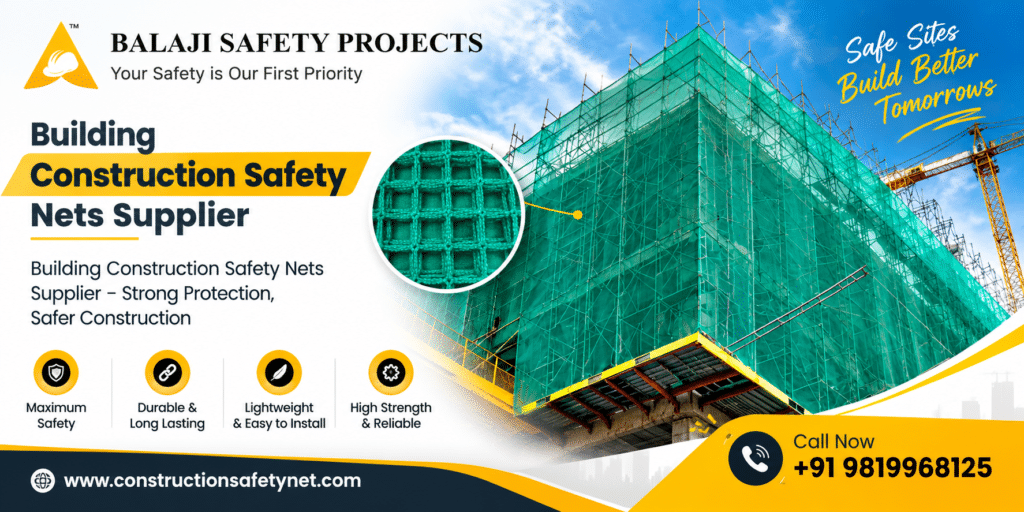
Scaffolding safety netting is installed around scaffolding structures to provide an additional protective barrier during construction and maintenance work. Depending on the mesh design, it can help contain light debris and reduce exposure to wind and dust.
- Residential buildings
- Commercial complexes
- Painting and plastering work
- Masonry projects
- Exterior finishing activities
4. Vertical Safety Nets
Vertical safety nets are installed along the sides of buildings, scaffolding, or open work areas. They create a protective boundary that helps control the movement of loose materials and reduce exposure to fall hazards.
- Building facades
- Open construction floors
- Scaffolding enclosures
- Balcony and edge protection systems
- Industrial construction sites
5. Horizontal Safety Nets
Horizontal safety nets are installed beneath elevated work areas to catch falling workers or objects, depending on the net’s design and certification. They are particularly useful when workers perform activities above open spaces.
- Multi-storey buildings
- Roof construction
- Steel framework installation
- Warehouse construction
- Bridge and infrastructure projects
Applications of Building Construction Safety Nets
1. High-Rise Building Construction
Safety nets are widely used during the construction of high-rise buildings, apartments, office towers, and skyscrapers. They help provide fall protection for workers operating at elevated levels and can help contain falling construction materials when correctly installed.
2. Residential Building Projects
Residential construction sites involve activities such as brickwork, plastering, painting, balcony installation, and exterior finishing. Safety nets can be installed around exposed edges and designated work areas to improve site safety and reduce the risk of falling objects.
3. Commercial Building Construction
Shopping malls, hotels, office complexes, and commercial buildings require appropriate safety measures during construction and renovation. Building construction safety nets help protect workers and support safer working conditions around scaffolding, open floors, and elevated work areas.
4. Scaffolding Safety
Construction workers frequently use scaffolding for masonry, painting, plastering, and other elevated tasks. Safety nets can be installed around suitable scaffolding structures to provide additional fall protection or debris containment, depending on the net type and installation design.
5. Bridge and Infrastructure Projects
Bridge construction, flyovers, elevated roadways, and other infrastructure projects often involve work at considerable heights. Specially selected and engineered safety nets can help protect workers and control falling debris in designated areas.
6. Industrial Construction Sites
Factories, warehouses, power plants, and industrial buildings require safety measures during structural construction, equipment installation, and maintenance. Construction safety nets can be used around elevated platforms and other exposed work zones where the application and installation are suitable.
7. Building Renovation and Repair
During renovation, structural repairs, exterior painting, and façade maintenance, safety nets can help control falling debris and improve protection around the work area. They are particularly useful where work takes place above entrances, walkways, or adjacent occupied spaces.
8. Roof Construction and Maintenance
Roofing work involves risks from open edges, fragile surfaces, and elevated working positions. Appropriate safety nets may be installed beneath designated work areas to reduce the consequences of a fall. They must be selected and installed according to the specific fall-protection requirements of the project.
9. Protection Against Falling Debris
Construction materials, broken concrete, packaging, tools, and other debris may fall from elevated work areas. Suitable debris safety netting can help contain these materials and reduce risks to workers and people nearby. Debris nets should not be treated as personal fall-arrest nets unless they are specifically designed and approved for that purpose.
10. Masonry and Plastering Work
Bricklayers, plasterers, and exterior finishing teams often work on scaffolds and elevated platforms. Safety netting can help control loose materials and improve protection around these operations when installed according to site requirements.
11. Protection Around Open Building Edges
Unprotected floor openings, balconies, stairwells, and slab edges can create serious fall hazards. Properly selected and secured safety nets can provide an additional protective measure in designated areas. They should be used alongside appropriate guardrails, covers, and other required protective systems.
Benefits of Choosing Balaji Safety Projects
1. Improved Worker Safety
One of the main benefits of building construction safety nets is improved worker protection. Construction workers often work on scaffolding, rooftops, elevated platforms, and building edges. Properly selected and installed safety nets can help catch a falling person in suitable applications, reducing the risk of severe injuries. They should be used alongside appropriate fall-prevention measures and personal protective equipment.
2. Protection Against Falling Objects
Construction materials, tools, small equipment, and debris can accidentally fall from elevated work areas. Suitable safety nets and debris netting help reduce the risk of these objects reaching workers, pedestrians, or property below. The correct type of net should be selected according to the object size, expected loads, and intended application.
3. Suitable for High-Rise Construction
High-rise building projects involve work at considerable heights, making reliable safety arrangements essential. Construction safety nets can be installed around suitable working areas, building perimeters, and scaffolding systems to provide additional protection when properly designed and secured. They are useful for residential towers, commercial buildings, office complexes, industrial facilities, and large infrastructure projects.
4. Helps Improve Construction Site Safety
A well-planned safety system helps construction teams maintain a more organised and controlled working environment. Safety nets can form part of a comprehensive fall-protection plan, helping contractors manage risks around elevated work areas and reduce exposure to falling-object hazards. Working with an experienced Building Construction Safety Nets Supplier helps project managers identify suitable netting solutions for their site conditions.
5. Durable and Reliable Performance
Construction safety nets manufactured from suitable materials can provide dependable performance when used within their specified limits. Depending on the product, nets may offer resistance to outdoor exposure, abrasion, and regular site use. Before purchasing, buyers should check material quality, mesh size, rated performance, UV resistance where required, and manufacturer guidance for inspection and replacement.
6. Reliable Quality and Durability
A professional Building Construction Safety Nets Supplier can help buyers select nets designed for the conditions of their construction site. Quality safety nets should be suitable for the expected loads, installation height, weather exposure, and duration of use. Depending on the material and design, construction safety nets may offer resistance to wear, regular site handling, and outdoor conditions. Regular inspections are necessary to identify damaged ropes, weakened mesh, or other defects before continued use.
7. Cost-Effective Safety Solution
Investing in appropriate construction safety nets may help reduce the financial impact of workplace accidents, project interruptions, and material damage. Preventing accidents can also support better workforce productivity and project management. Contractors should compare safety nets based on their quality, intended application, load capacity, service life, inspection requirements, and installation costs rather than selecting products on price alone.
8. Easy Installation and Handling
Many construction safety nets are designed to be installed around building perimeters, scaffolding, or designated work areas. Their installation requirements depend on the net design, anchorage system, building structure, and site layout. Working with an experienced supplier helps contractors understand the product requirements and coordinate suitable installation procedures. Safety nets must be installed by competent personnel according to the applicable safety standards and manufacturer instructions.
9. Reliable Supply and Technical Assistance
Working with an experienced Building Construction Safety Nets Supplier can simplify purchasing for contractors, builders, developers, and infrastructure companies. A reliable supplier should help buyers understand product specifications, available sizes, material options, delivery schedules, and installation requirements. This support can make it easier to select netting that matches the project’s safety needs.
Why Choose Balaji Safety Projects
1. High-Quality Safety Nets
A professional Building Construction Safety Nets Supplier provides nets manufactured from suitable materials designed for construction environments. Quality netting should offer appropriate strength, durability, and resistance to regular site conditions. Selecting the right net helps provide dependable protection when it is correctly installed and used according to its specifications.
2. Improved Worker Safety
Worker safety is a major priority on every construction site. Properly selected and installed safety nets can help reduce the risk of serious injuries by catching falling workers in suitable applications. They can also help contain certain falling materials, depending on the net type and its intended use. Safety nets should always be used as part of a comprehensive fall-protection plan, alongside appropriate guardrails, personal protective equipment, and safe working procedures.
3. Durable and Reliable Products
Construction sites expose safety equipment to dust, sunlight, changing weather, and demanding working conditions. A dependable supplier helps you select safety nets with suitable material properties and durability for the intended environment. Durable products can reduce frequent replacement needs when they are properly installed, inspected, maintained, and stored according to the manufacturer’s instructions.
4. Compliance with Safety Requirements
A professional supplier can help buyers identify safety nets that meet the applicable project specifications and relevant safety standards. Before purchasing, ask for product certifications, test reports, load-capacity information, and installation guidance where applicable. This helps construction companies make informed purchasing decisions and maintain appropriate site safety practices.
5. Cost-Effective Purchasing
Choosing the right supplier can help construction companies manage purchasing costs without compromising safety. Durable, application-appropriate products may reduce premature replacement and unnecessary maintenance expenses. Buyers should compare material specifications, certifications, dimensions, expected service life, and after-sales support rather than selecting a product based only on its lowest price.
6. Expert Guidance and Technical Support
A knowledgeable supplier can assist with selecting net dimensions, understanding material specifications, checking compatibility with the site, and arranging suitable installation accessories. Technical guidance is especially useful for contractors managing complex projects or working at significant heights. However, safety nets should always be installed by competent personnel according to the manufacturer’s instructions and applicable safety requirements.
7. Timely Delivery and Reliable Service
Construction schedules often depend on receiving safety equipment on time. A reliable Building Construction Safety Nets Supplier can help coordinate product availability, order quantities, delivery schedules, and documentation. Consistent service makes it easier for contractors and project managers to plan installations and maintain site safety arrangements.
Frequently Asked Questions (FAQs)
1. What are building construction safety nets used for
They are used to help protect construction workers and people nearby by arresting falls with suitable fall-arrest systems or containing falling debris with appropriately designed netting.
2. Which material is commonly used for construction safety nets
HDPE and other suitable synthetic fibres are commonly used for construction netting. The correct material depends on the application, required performance, and environmental conditions.
3. Where are building construction safety nets installed
They may be installed around scaffolding, building exteriors, elevated work areas, and other locations where fall or debris hazards exist.
4. How do I choose the right construction safety net
Consider the intended application, required load performance, mesh size, material quality, site conditions, applicable standards, and installation requirements.
5. Can safety nets protect workers from falling
Purpose-designed and appropriately tested fall-arrest safety nets can help catch falling workers when correctly installed and used within their specified limits. Ordinary debris nets must not be used for this purpose unless specifically designed and certified for it.
6. Are construction safety nets suitable for outdoor use
Some construction safety nets are designed for outdoor exposure. Buyers should check UV resistance, weather suitability, and the manufacturer’s recommended service conditions.
7. Why should I contact Balaji Safety Projects
Balaji Safety Projects can be contacted to discuss construction safety net requirements and identify suitable solutions based on project dimensions, intended application, and safety specifications.
Conclusion
Building construction safety nets play an important role in managing fall hazards and controlling falling materials on modern construction sites. From residential buildings and commercial complexes to industrial structures and renovation projects, choosing the right netting system can support better site safety and more organised construction activities. We are the best Building Construction Safety Nets in Maharashtra.
Balaji Safety Projects is focused on supporting construction businesses with practical safety net solutions. By selecting suitable materials, checking product specifications, and ensuring correct installation, builders and contractors can take meaningful steps towards safer construction projects. If you are planning a new building project or upgrading your existing site safety arrangements, contact Balaji Safety Projects to discuss your building construction safety net requirements.