
Double Layer Safety Nets
Introduction
Balaji Safety Projects provides workplace safety netting solutions for the roofing and construction industries. Additionally, our product range encompasses Braided Safety Nets, Agro Shade Nets, Monofilament Nets / Scaffolding Nets, Anti Bird Net, Bird Spikes, Full Body Harness & Protective Equipment, and ropes, etc. We use good quality raw materials to make these safety nets and ropes. Since the establishment of the company, we regularly improvise on our existing range of products of safety nets in order to come up with products that stand high on performance and durability.
Safety is one of the most important parts of every construction project. Whether it is a residential building, commercial complex, industrial facility, or infrastructure project, protecting workers from accidental falls is essential. Working at heights involves many risks, and proper safety arrangements can help reduce these dangers. One effective safety solution is Double Layer Safety Nets.
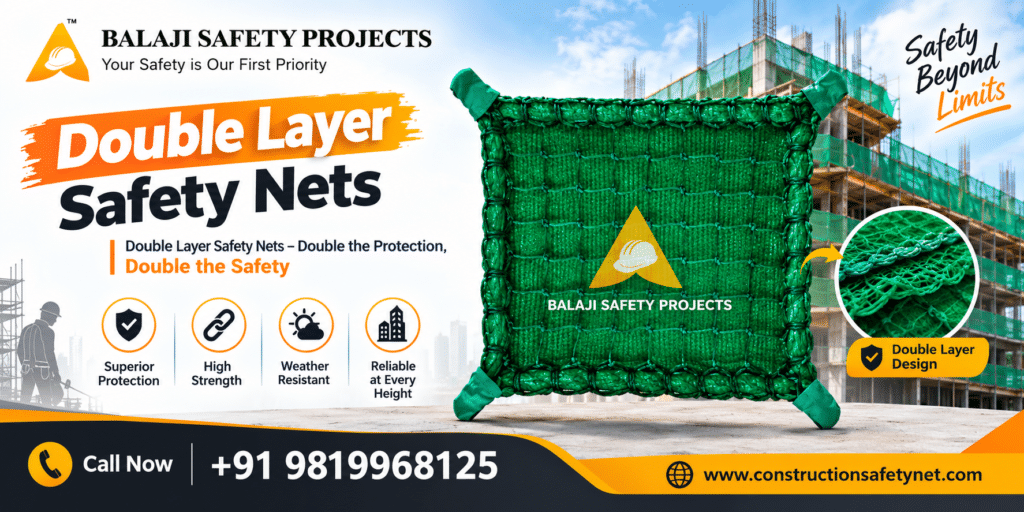
Double Layer Safety Nets are designed to provide an additional level of protection at construction sites and other workplaces where workers perform tasks at height. These nets can help catch falling debris and provide a secondary protective layer when installed correctly as part of a complete fall protection system.
Balaji Safety Projects provides construction safety solutions to help contractors, builders, and industrial companies improve workplace safety. With a focus on practical protection and reliable safety arrangements, the company supports projects that require dependable safety net systems.
What Are Double Layer Safety Nets
Double Layer Safety Nets are safety net arrangements made using two layers of netting to provide additional protection in suitable applications. Depending on the design, installation, and intended purpose, the layers may help contain falling materials and offer extra protection against certain site hazards.
These systems are particularly useful on construction projects where workers carry out activities at different heights. They may be considered for building construction, renovation, industrial maintenance, and other work environments where falling objects or people could create serious risks.
The performance of a double-layer system depends on the quality of the net material, mesh design, fixing arrangements, supporting structure, and correct installation. The system must be selected according to the specific risks and applicable safety requirements.
Importance of Double Layer Safety Nets in Construction
Construction sites contain several hazards, including open edges, scaffolding, unfinished floors, and falling tools or materials. Without suitable safety measures, these hazards can lead to serious injuries, property damage, and project delays.
- Additional protection: Two layers can provide an extra level of containment when the system is designed for that purpose.
- Falling debris control: Suitable netting can help catch small tools and construction debris, depending on the mesh and system specifications.
- Improved site safety: Properly installed safety nets form part of a wider workplace risk management plan.
- Support for construction activities: Safety net systems can help contractors manage selected work-at-height hazards.
- Better safety planning: Installing suitable protective systems demonstrates a commitment to worker safety and responsible construction practices.
It is important to remember that two layers do not automatically guarantee greater fall protection. The complete system must be engineered, installed, inspected, and used according to its intended application.
Key Features of Double Layer Safety Nets
1. Strong and Durable Materials
Safety nets should be manufactured from materials suitable for the working environment. Common net materials include synthetic fibres such as polypropylene or polyethene, depending on the application and product specifications. Material selection should consider strength, exposure conditions, and expected service life.
2. Two-Layer Protection Design
The double-layer arrangement provides an additional layer of netting for applications where the design calls for it. Both layers must be compatible with the intended loads and properly secured to the supporting structure.
3. Suitable Mesh Construction
Mesh size plays an important role in determining whether a net is suitable for containing particular objects or providing a specific protective function. The mesh should be selected according to the hazards present at the worksite.
4. Weather Resistance
Construction safety nets may be exposed to sunlight, rain, dust, and changing temperatures. Choosing products with appropriate environmental resistance can help maintain their performance. Regular inspection is still necessary because weather exposure can gradually weaken materials.
5. Proper Installation Arrangements
The effectiveness of Double Layer Safety Nets depends on secure anchorage, suitable support structures, correct clearances, and installation by competent personnel. Improper fixing can reduce the system’s protective performance.
Applications of Double Layer Safety Nets
1. High-Rise Building Construction
One of the main applications of Double Layer Safety Nets is high-rise building construction. During the construction of residential apartments, commercial towers, and office buildings, workers often work at considerable heights. These nets can be installed around exposed floors, building edges, and other suitable areas to provide additional fall protection.
They also help catch certain falling materials and debris, reducing the possibility of injuries to workers and people in nearby areas. Proper installation and regular inspection are essential to maintain their effectiveness.
2. Infrastructure Development Projects
Infrastructure projects such as bridges, flyovers, elevated roads, and railway structures involve work at different heights. Double Layer Safety Nets can be used in suitable locations to provide an additional protective barrier for workers and nearby areas.
These nets are useful during concrete work, structural assembly, maintenance, and other activities where falling hazards may occur. Their selection should depend on the site conditions, expected loads, and applicable safety standards.
3. Industrial Construction and Maintenance
Industrial plants, factories, warehouses, and manufacturing units may require maintenance work at elevated platforms, rooftops, and steel structures. Double Layer Safety Nets can help provide secondary protection in areas where workers perform tasks above ground level.
They can also help control certain falling-object hazards during equipment installation, repairs, and structural maintenance. Industries should ensure that the nets are compatible with the specific hazards present at the workplace.
4. Scaffolding Safety
Scaffolding is widely used for plastering, painting, brickwork, electrical installation, and other construction activities. Workers using scaffolding may face fall hazards, while tools and small materials can accidentally drop from working platforms.
Double Layer Safety Nets can be installed in appropriate configurations around or beneath scaffolding to provide an additional protective measure. They should not replace guardrails, safe working platforms, personal fall-arrest systems, or other required safety equipment.
5. Commercial Building Projects
Shopping malls, hotels, hospitals, office complexes, and other commercial buildings often involve complex construction activities. Double Layer Safety Nets can support site safety during structural work, exterior finishing, glazing, and installation of building services.
These nets are particularly useful when several teams are working at different levels of a building. A suitable netting arrangement can help reduce exposure to falling-object hazards and support a safer working environment.
6. Bridge and Flyover Construction
Bridge and flyover construction frequently involves work above roads, rivers, railway tracks, or public spaces. In these situations, falling tools, debris, or construction materials can create serious risks.
Double Layer Safety Nets may be installed beneath or around suitable working areas to provide additional containment and protection. Engineers should consider the height of installation, clearance requirements, environmental conditions, and potential impact loads before selecting the net system.
7. Roofing and Ceiling Installation
Roofing, ceiling installation, and overhead structural work can expose workers to fall hazards, especially when working on elevated or fragile surfaces. Double Layer Safety Nets may be used as part of a planned safety arrangement to provide secondary protection beneath designated work areas.
The net must be suitable for the installation height and the expected fall conditions. Fragile roofs and openings require specific protective measures, and workers should never rely on a safety net without verifying its suitability for the task.
8. Warehouses and Storage Facilities
Large warehouses and industrial storage facilities may involve work on elevated racks, mezzanine floors, roof structures, and maintenance platforms. Double Layer Safety Nets can be useful where there is a risk of objects falling into lower-level work areas.
Depending on their design, they may also support containment applications around certain elevated work zones. However, they should not be treated as load-bearing storage systems unless specifically designed and certified for that purpose.
9. Shipbuilding and Heavy Engineering
Shipyards and heavy engineering facilities often involve large structures, overhead assembly, welding, fabrication, and maintenance at height. Double Layer Safety Nets can provide additional protection in suitable work zones where workers or materials may fall.
Their use should be planned around heat, sparks, chemicals, sharp edges, and other environmental hazards. Standard netting may not be suitable for every industrial condition, so the correct material and specification are important.
10. Road, Railway, and Public Infrastructure Maintenance
Maintenance work on elevated roads, railway bridges, platforms, and public infrastructure can expose workers and pedestrians to falling-object hazards. Double Layer Safety Nets can be used in appropriate configurations to help contain debris and provide secondary protection.
Before installation, project managers should assess traffic movement, public access, wind conditions, and the consequences of net failure. Additional barriers and exclusion zones may also be required.
Benefits of Using Double Layer Safety Nets
1. Enhanced Safety and Protection
The primary benefit of Double Layer Safety Nets is improved protection at construction sites. Working at height involves several risks, including accidental slips, loss of balance, and falling objects. A suitable double-layer net system can help catch falling materials and may provide an additional safety barrier for workers. This helps construction companies create a safer working environment and manage risks more effectively.
2. Additional Layer of Protection
A double-layer design provides two net layers instead of one. Depending on the product design and installation, the second layer can offer supplementary containment if the upper layer is damaged or if material passes through the first layer. However, both layers must be properly designed, secured, and maintained to perform their intended function. The net system should never be treated as a substitute for suitable personal fall-protection equipment where required.
3. Helps Reduce the Risk of Falling Objects
Construction sites often involve the movement of bricks, tools, small building materials, and other objects. If these items fall from an elevated floor, they can injure workers below or damage equipment. Double Layer Safety Nets can help contain certain falling objects when the mesh size and net strength are suitable for the materials involved. This makes them useful around building facades, scaffolding, and elevated work platforms.
4. Suitable for High-Rise Construction Projects
High-rise construction projects require careful planning because work takes place at different heights and multiple activities may happen simultaneously. Double Layer Safety Nets can be installed in appropriate locations to help improve site protection and control falling-object hazards. They are useful for residential towers, commercial buildings, industrial structures, and large infrastructure projects.
5. Supports a Safer Working Environment
A safe workplace allows workers to focus on their tasks with greater confidence. When suitable safety nets are installed, workers and supervisors have an additional protective measure to support the site’s overall safety plan. Double Layer Safety Nets can contribute to safer working conditions when combined with guardrails, proper scaffolding, training, warning signs, and appropriate personal protective equipment.
6. Durable and Reliable Performance
Quality Double Layer Safety Nets are manufactured using materials selected for strength, flexibility, and resistance to demanding site conditions. Depending on the material and product specification, they may be suitable for outdoor construction environments where exposure to sunlight, dust, moisture, and changing weather conditions is common.
7. Helps Protect Workers and Property
Falling objects can cause injuries, interrupt work, and damage machinery, vehicles, and building materials. Double Layer Safety Nets can help control these risks by providing an additional containment measure in suitable applications. By reducing exposure to falling-object hazards, they can support better protection for workers and property around the construction area.
8. Flexible Installation Options
Double Layer Safety Nets can be considered for different construction layouts and industrial applications. Depending on the design, they may be installed around building perimeters, beneath elevated working areas, or in selected locations where falling-object protection is required. Their installation should be planned by competent personnel who understand the structural anchorage, edge protection, clearances, and loading requirements. Correct installation is essential for the system to provide effective protection.
9. Supports Construction Safety Management
Construction companies must identify workplace hazards and introduce suitable controls before work begins. Double Layer Safety Nets can form part of a comprehensive fall-protection and falling-object prevention plan. They can help site managers organise work zones, protect areas below elevated activities, and improve overall site safety arrangements.
10. Potential to Reduce Work Disruptions
Accidents and falling-object incidents can interrupt construction activities, require investigations, and cause delays. Properly selected and installed Double Layer Safety Nets can help manage certain site hazards and support smoother project operations. Their use, together with other preventive measures, can contribute to better work planning and fewer avoidable safety interruptions.
Why Choose Balaji Safety
1. Enhanced Safety and Protection
The main reason to choose Double Layer Safety Nets is to improve protection at construction sites and other elevated work areas. Working at height involves risks such as falling tools, construction materials, and accidental slips. A properly designed and installed double-layer system can provide an additional protective barrier. It helps reduce the possibility of materials passing through the net and supports a safer working environment for workers and people nearby.
2. Double-Layer Design for Additional Support
The two-layer construction offers an extra layer of netting compared with a single-layer arrangement. Depending on the net design, material, and installation method, this structure can help improve containment and provide additional protection against falling debris. It is especially useful at locations where construction activities generate dust, small materials, or other falling objects. However, the net must be selected according to the specific hazards and should not be assumed to provide fall protection without appropriate testing and certification.
3. Suitable for Construction Projects
Double Layer Safety Nets are suitable for a variety of construction applications, including high-rise buildings, residential complexes, commercial developments, bridges, and infrastructure projects. They can be used around suitable work zones to help control falling debris and improve site safety. Contractors can select the appropriate net size, mesh design, strength, and installation arrangement according to the requirements of the project.
4. Strong and Durable Material Options
Quality safety nets are manufactured using suitable synthetic fibres, such as high-strength polypropylene or other materials selected for the intended application. The right material can offer useful properties such as resistance to wear, flexibility, and suitability for outdoor use. Durability depends on the material grade, UV resistance, environmental exposure, and maintenance practices. Choosing a net designed for the actual site conditions helps improve service life and supports reliable performance.
5. Helps Control Falling Debris
Falling debris is a common concern during construction, renovation, demolition, and maintenance work. Small pieces of concrete, packaging materials, dust, and other debris can create hazards for workers and people below. Double Layer Safety Nets can help contain suitable debris when their mesh size and design match the application. This helps maintain a more organised worksite and reduces the risk of materials spreading into nearby areas.
6. Supports Workplace Safety Management
A safer workplace requires suitable equipment, trained workers, clear procedures, and regular inspections. Double Layer Safety Nets can form part of a wider fall-prevention and debris-containment plan. They help site managers organise hazardous work areas and establish additional protective measures. When combined with guardrails, personal protective equipment, secure platforms, and other appropriate controls, they contribute to a more comprehensive site safety strategy.
7. Flexible Installation Options
Double Layer Safety Nets are available in different sizes and configurations to suit various construction layouts. Depending on the design, they may be installed around building perimeters, beneath selected work areas, or in other approved locations. Correct installation is essential for effective performance. Contractors should ensure that the supporting structure, anchoring points, fixing methods, clearances, and net specifications are suitable for the expected loads and site conditions.
8. Cost-Effective Safety Solution
Investing in suitable safety nets can help businesses manage construction risks and reduce the likelihood of incidents involving falling debris. A durable, correctly installed netting system may also reduce the need for repeated replacement when maintained according to the manufacturer’s instructions. The overall value depends on the initial cost, expected service life, inspection requirements, installation expenses, and suitability for the work being performed.
9. Suitable for Different Industrial Applications
Double Layer Safety Nets can be considered for a range of workplaces beyond conventional construction sites. Depending on their design and certification, they may be useful for industrial maintenance, warehouse operations, building repairs, infrastructure projects, and selected installation activities. Each application has different safety requirements, so the net must be chosen according to the type of hazard, working height, expected load, and surrounding environment.
10. Easy Inspection and Maintenance
Regular inspection helps identify damage that could affect the performance of a safety net. Site teams should check for cuts, broken fibres, damaged stitching, loose connections, corrosion in associated fittings, and signs of excessive wear. Nets exposed to sunlight, chemicals, sharp edges, or severe weather may require additional attention. Any damaged net should be removed from service until it has been assessed and repaired or replaced according to the manufacturer’s guidance.
How to Select the Right Double Layer Safety Nets
Choosing the correct safety net requires more than comparing prices. Consider the following points before purchasing:
- Identify the application: Decide whether the net is intended for personnel fall protection, debris containment, or another specific purpose.
- Check the material: Select material appropriate for the site conditions and expected exposure.
- Confirm technical specifications: Review net strength, mesh size, dimensions, and applicable performance standards.
- Evaluate the installation area: Consider anchorage points, supporting structures, clearances, and potential obstructions.
- Use competent installers: Installation should follow the manufacturer’s instructions and applicable safety requirements.
- Inspect the system regularly: Check for cuts, damaged stitching, deterioration, loose connections, and other defects.
- Replace damaged equipment: Nets that have suffered impact loading or show signs of damage should be assessed by a competent person before reuse.
A double-layer system should never be assumed to be suitable for every fall protection requirement. It must be selected for its intended function and used with other necessary protective measures.
Safety and Maintenance Tips
Regular maintenance helps ensure that safety net systems remain suitable for use. Before work begins, inspect the netting, attachment points, supporting structures, and surrounding work area.
Remove unsuitable or damaged nets from service until they have been assessed. Follow the manufacturer’s inspection, cleaning, storage, and replacement instructions. Avoid unauthorised modifications, overloading, or using a debris net as a personnel fall-arrest system unless it is specifically designed and approved for that purpose.
Employers should also provide suitable training, safe access arrangements, guardrails where required, and appropriate personal protective equipment. Safety nets are one part of a comprehensive fall prevention and protection strategy.
Frequently Asked Questions (FAQs)
1. What are Double Layer Safety Nets
Double Layer Safety Nets are safety net arrangements that use two layers of netting for additional protection in suitable applications. Their exact function depends on the system design and intended use.
2. Where are Double Layer Safety Nets used
They may be used on building construction sites, industrial facilities, scaffolding areas, infrastructure projects, and renovation sites where the selected system is appropriate.
3. What are the main benefits of Double Layer Safety Nets
Potential benefits include additional containment, support for construction safety management, and assistance in controlling selected falling-object hazards.
4. Are Double Layer Safety Nets suitable for high-rise buildings
They can be considered for high-rise construction when the system is properly designed for the required application, installed correctly, and compliant with applicable safety requirements.
5. How do I choose the right safety net
Consider the intended use, material, mesh size, strength, installation conditions, environmental exposure, and relevant safety standards. Consult a competent safety professional when necessary.
6. How often should safety nets be inspected
Inspect safety nets before use and at the intervals specified by the manufacturer and applicable safety requirements. Additional inspections may be necessary after impact loading, severe weather, or other events that could affect performance.
7. Why choose Balaji Safety Projects
Balaji Safety Projects focuses on construction safety solutions and can help customers discuss their project requirements and identify a suitable safety net arrangement.
8. Can Double Layer Safety Nets replace all other safety equipment
No. Safety nets are only one part of a complete safety plan. Depending on the risks, projects may also require guardrails, safe access systems, personal protective equipment, training, and other fall prevention measures.
Conclusion
Double Layer Safety Nets can play an important role in construction safety when they are designed and installed for the correct application. They can help manage selected falling hazards, support safer working conditions, and improve construction site protection. However, the effectiveness of any safety net depends on its specifications, installation, maintenance, and suitability for the intended purpose.
Balaji Safety Projects aims to support builders, contractors, and industrial customers with practical construction safety solutions. If you are planning a new building project, industrial installation, or renovation activity, choosing the right safety net system is an important step towards a safer workplace. Contact Balaji Safety Projects to discuss your construction safety requirements and identify a suitable solution for your project.